100 Greatest Western Philosophers
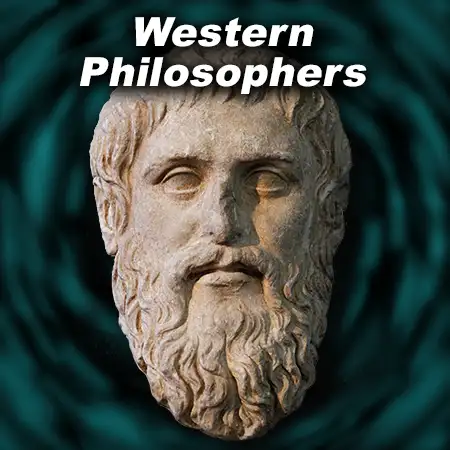
Criteria: These Western philosophers are ranked according to their influence on Western thought, reputation as a philosopher and body of philosophical work (in terms of influence, acclaim and popularity). Philosophers with no surviving works are relegated to honorable mentions. A selected philosophical work is listed for each philosopher when applicable.
Greatest Western Philosophers
- Plato
(c. 428 - 348 BC) - The Republic - Aristotle
(384 - 322 BC) - Nicomachean Ethics - Immanuel Kant
(1724 - 1804) - Critique of Pure Reason - Thomas Aquinas
(1225 - 1274) - Summa Theologica - Friedrich Nietzsche
(1844 - 1900) - Thus Spoke Zarathustra - Rene Descartes
(1596 - 1650) - Meditations on First Philosophy - David Hume
(1711 - 1776) - A Treatise of Human Nature - Georg Friedrich Hegel
(1770 - 1831) - Phenomenology of Spirit - St. Augustine
(354 - 430) - Confessions - Karl Marx
(1813 - 1883) - The Communist Manifesto - John Locke
(1632- 1704) - An Essay Concerning Human Understanding - Avicenna
(c. 980 - 1037) - The Book of Healing - Ludwig Wittgenstein
(1889 - 1951) - Philosophical Investigations - Martin Heidegger
(1889 - 1976) - Being and Time - Plotinus
(c. 204/5 - 270) - The Enneads - Soren Kierkegaard
(1813 - 1855) - Fear and Trembling - John-Jacques Rousseau
(1712 - 1778) - The Social Contract - Gottfried Leibniz
(1646 - 1716) - Monadology - Baruch Spinoza
(1632 - 1677) - Ethics - Bertrand Russell
(1872 - 1970) - The Problems of Philosophy - Thomas Hobbes
(1588 - 1679) - Leviathan - John Rawls
(1921 - 2002) - A Theory of Justice - John Stuart Mill
(1806 - 1873) - On Liberty - Ralph Waldo Emerson
(1803 - 1882) - Essays: First Series - Gottlob Frege
(1848 - 1925) - The Foundations of Arithmetic - Niccolò Machiavelli
(1469 - 1527) - The Prince - Arthur Schopenhauer
(1788 - 1860) - The World as Will and Representation - Francis Bacon
(1561 - 1626) - Novum Organum - Karl Popper
(1902 - 1994) - The Logic of Scientific Discovery - George Berkeley
(1685 - 1753) - A Treatise Concerning the Principles of Human Knowledge - William James
(1842 - 1910) - The Principles of Psychology - John Dewey
(1859 - 1952) - Art as Experience - Jean-Paul Sartre
(1905 - 1980) - Being and Nothingness - Simone de Beauvoir
(1908 - 1986) - The Second Sex - Jeremy Bentham
(1748 - 1832) - An Introduction to the Principles of Morals and Legislation - Voltaire
(1694 - 1778) - Philosophical Letters - Hannah Arendt
(1906 - 1975) - The Human Condition - Albert Camus
(1913 - 1960) - The Myth of Sisyphus - Michel Foucault
(1926 - 1984) - Discipline and Punish - Noam Chomsky
(1928 - ) - Syntactic Structures - Henry David Thoreau
(1817 - 1862) - Walden - Anselm of Canterbury
(1033 - 1109) - Proslogion - Duns Scotus
(c. 1265/66 - 1308) - Ordinatio - William Ockham
(c. 1287 - 1347) - Summa Logicae - Pierre Bayle
(1647 - 1706) - Historical and Critical Dictionary - Gilles Deleuze
(1925 - 1995) - Difference and Repetition - Auguste Comte
(1797 - 1857) - Course of Positive Philosophy - G.E. Moore
(1873 - 1958) - Principia Ethica - Charles Sanders Peirce
(1839 - 1914) - Illustrations of the Logic of Science - Willard Van Orman Quine
(1908 - 2000) - Two Dogmas of Empiricism - Marcus Aurelius
(121 - 180) - Meditations - Averroes
(1126 -1198) - The Incoherence of the Incoherence - Blaise Pascal
(1623 - 1662) - Pensées - Giordano Bruno
(1548 - 1600) - De umbris idearum - Maimonides
(1135 - 1204) - Mishneh Torah - Boethius
(с. 480 - 524) - On the Consolation of Philosophy - Jürgen Habermas
(1929 - 2026) - The Theory of Communicative Action - Jacques Derrida
(1930 - 2004) - Speech and Phenomena - Thomas Kuhn
(1922 - 1996) - The Structure of Scientific Revolutions - Richard Rorty
(1931 - 2007) - Philosophy and the Mirror of Nature - Saul Kripke
(1940 - ) - Naming and Necessity - Henri de Saint-Simon
(1760 - 1825) - Nouveau Christianisme - al-Ghazali
(1058 - 1111) - The Incoherence of the Philosophers - Montesquieu
(1689 - 1755) - The Spirit of Law - Denis Diderot
(1713 - 1784) - Jacques the Fatalist - Mary Wollstonecraft
(1759 - 1797) - A Vindication of the Rights of Woman - Henri Bergson
(1859 - 1941) - Time and Free Will - Alfred North Whitehead
(1861 - 1947) - Process and Reality - Rudolf Carnap
(1891 - 1970) - The Elimination of Metaphysics Through Logical Analysis of Language - Theodor W. Adorno
(1903 - 1969) - Dialectic of Enlightenment - Peter Singer
(1946 - ) - Animal Liberation - Judith Butler
(1956 - ) - Gender Trouble: Feminism and the Subversion of Identity - Seneca
(c. 4 BC - 65) - Epistulae Morales ad Lucilium - al-Farabi
(c. 870 - c. 950) - Kitab al-Musiqi al-Kabir - Peter Abelard
(1079 - 1142) - Sic et Non - Thomas Paine
(1737 - 1809) - Common Sense - Maurice Merleau-Ponty
(1908 - 1961) - Phenomenology of Perception - Cicero
(106 - 43 BC) - De Oratore - Lucretius
(c. 99 - 55 BC) - On the Nature of Things - Sextus Empiricus
(c. 160 - 210) - Outlines of Pyrrhonism - Erasmus
(c. 1466 - 1536) - The Praise of Folly - Thomas More
(1478 - 1535) - Utopia - Johann Gottlieb Fichte
(1762 - 1814) - Foundations of Natural Right - Friedrich Schelling
(1775 - 1854) - System of Transcendental Idealism - Herbert Spencer
(1820 - 1903) - The Man Versus the State - George Santayana
(1863 - 1952) - The Sense of Beauty - Hans-Georg Gadamer
(1900 - 2002) - Truth and Method - Jacques Lacan
(1901 - 1981) - Écrits - Slavoj Žižek
(1949 - ) - The Sublime Object of Ideology - Frantz Fanon
(1908 - 1961) - The Wretched of the Earth - Claude Lévi-Strauss
(1908 - 2009) - Tristes Tropiques - Simone Weil
(1909 - 1943) - The Need for Roots - Donald Davidson
(1917 - 2003) - Mental Events - Elizabeth Anscombe
(1919 - 2001) - Philosophical Investigations - Ayn Rand
(1905 - 1982) - Atlas Shrugged - Judith Jarvis Thomson
(1929 - ) - A Defense of Abortion - Luce Irigaray
(1930 - ) - Speculum of the Other Woman - Thomas Nagel
(1937 - ) - What Is It Like to Be a Bat? - Robert Nozick
(1938 - 2002) - Anarchy, State, and Utopia - John McDowell
(1942 - ) - Mind and World
Honorable Mentions
- A.J. Ayer
(1910 - 1989) - Language, Truth, and Logic - Jacob Böhme
(1575 - 1624) - The Signature of All Things - John Calvin
(1509 - 1564) - Institutes of the Christian Religion - R.G. Collingwood
(1889 - 1943) - The Idea of History - Democritus
(460 - 360 BC) - Daniel Dennett
(1942 - 2024) - Consciousness Explained - Diogenes the Cynic
(412 - 323 BC) - Émile Durkheim
(1858 - 1917) - The Elementary Forms of Religious Life - Epicurus
(341 - 270 BC) - Letter to Menoeceus - Paul Feyerabend
(1924 - 1994) - Against Method - Sigmund Freud
(1856 - 1939) - The Psychopathology of Everyday Life - Erich Fromm
(1900 - 1980) - The Art of Loving - Pope Gregory I
(c. 540 - 604) - Dialogues - Heraclitus
(fl. c. 500 BC) - Hypatia of Alexandria
(c. 350/370 - 415) - Karl Jaspers
(1883 - 1969) - Philosophy - Christine Korsgaard
(1952 - ) - Self-Constitution - Imre Lakatos
(1922 - 1974) - Proofs and Refutations - Emmanuel Levinas
(1906 - 1995) - Totality and Infinity - Martha Nussbaum
(1947 - ) - The Fragility of Goodness - Parmenides
(born c. 515 BC) - Hilary Putnam
(1926 - 2016) - Philosophy of Logic - Pyrrho
(c. 360 - c. 270 BC) - Pythagoras
(c. 570 - c. 495 BC) - John Searle
(1932 - 2025) - Speech Acts: An Essay in the Philosophy of Language - Wilfrid Sellars
(1912 - 1989) - Empiricism and the Philosophy of Mind - Adam Smith
(1723 - 1790) - The Theory of Moral Sentiments - Socrates
(c. 470 - 399 BC) - Emanuel Swedenborg
(1688 - 1772) - Heaven and Hell - Thales
(c. 624 - c. 546 BC) - Alexis de Tocqueville
(1805 - 1859) - Democracy in America - Max Weber
(1864 - 1920) - The Protestant Ethic and the Spirit of Capitalism - Cornel West
(1953 - ) - Race Matters - Zeno of Citium
(c. 334 - 262 BC) - Zeno of Elea
(c. 490 - 430 BC) - Zoroaster
(c. 624-599 – c. 547-522 BC)
Greatest philosophers worldwide
- Confucius
(c. 551 - c. 479 BC) - Confucianism - Plato
(c. 428 - 348 BC) - "The Republic" - Aristotle
(384 - 322 BC) - "Nicomachean Ethics" - The Buddha
(c. 563-480 – 483-400 BC) - Buddhism - Immanuel Kant
(1724 - 1804) - "Critique of Pure Reason" - Avicenna
(c. 980 - 1037) - "The Book of Healing" - Zhu Xi
(1130 - 1200) - Neo-Confucianism - Thomas Aquinas
(1225 - 1274) - "Summa Theologica" - Adi Shankara
(c. 700 - c. 750) - Advaita Vedanta - Karl Marx
(1813 - 1883) - "The Communist Manifesto"
Greatest philosophers pre-socratics (Greece)
- Pythagoras
(c. 570 - c. 495 BC) - Pythagoreanism, mysticism - Thales
(c. 624 - c. 546 BC) - considered the first Western philosopher; natural philosophy; "Everything is water" - Parmenides
(born c. 515 BC) - Monism; truth/opinion distinction - Heraclitus
(fl. c. 500 BC) - Fire is the arche; Logos; Flux; Unity of opposites - Zeno of Elea
(c. 490 - 430 BC) - Monism; Zeno's paradoxes - Xenophanes
(c. 570 - c. 470 BC) - Polytheistic religious views as human projections; Earth is the arche; The distinction between knowledge and mere true belief - Anaxagoras
(c. 500 - c. 428 BC) - Nous - Democritus
(c. 460 - c. 370 BC) - Atomism - Leucippus
(fl. c. 5th century BC) - Atomism - Empedocles
(c. 494 - c. 434 BC) - four classical elements; Love and Strife
List Compiled and Edited By Tim
List Begun: 2026-10-05
List Begun: 2026-10-05